Transport stress induces neuroimmune dysregulation and exacerbates Mycobacterium tuberculosis infection in mice
Abstract
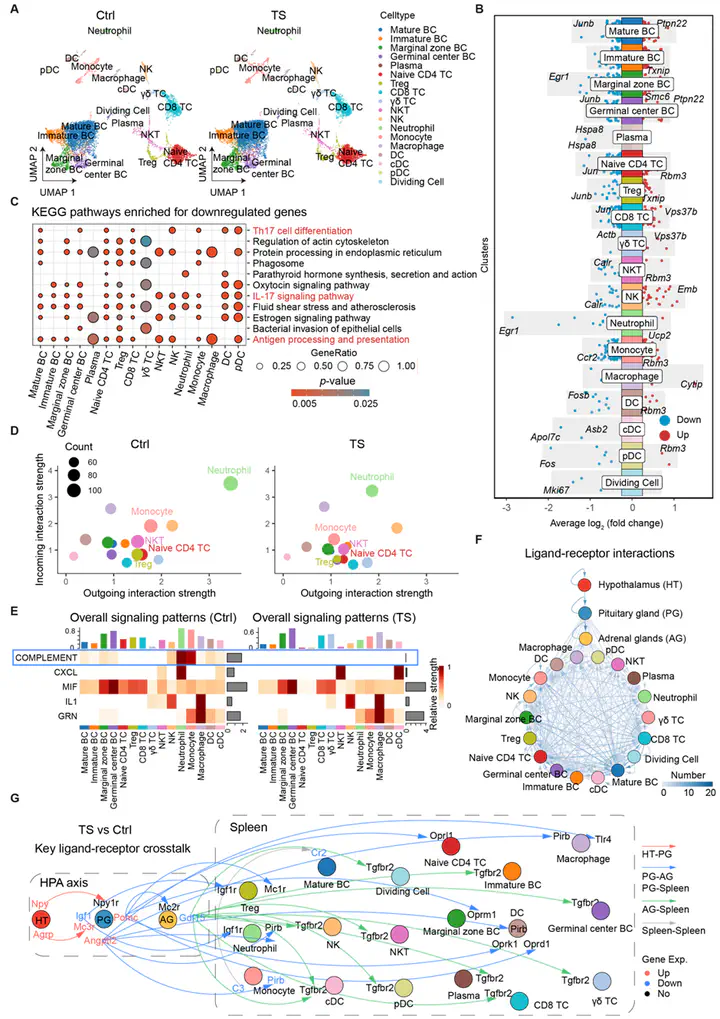
Transport stress (TS) significantly impacts immune function and infection, of which the cellular and molecular mechanisms remain elusive. In this study, we investigated the effects of TS on immune responses and its role in exacerbating Mycobacterium tuberculosis (Mtb) infection. TS induced anxiety-like behaviors, disrupted hypothalamic–pituitary–adrenal (HPA) axis homeostasis, altered hormone secretion patterns, and led to dysregulation of stress response genes in mice. Single-cell RNA sequencing of the spleen revealed severe immune dysfunction upon TS, characterized by inhibition of Th17 differentiation, IL-17 signaling, and antigen presentation. Importantly, TS affects the crosstalk between the HPA axis and the spleen through ligand–receptor interactions. Furthermore, TS exacerbated the severity of Mtb infection and disturbed infection-induced gene regulation. TS impairs Th1/Th2 differentiation through neuroendocrine immune dysregulation, and also compromises macrophage immune function, further weakening host defense. These findings could greatly contribute to understanding TS-induced neuroendocrine immune regulation and deteriorated infection.